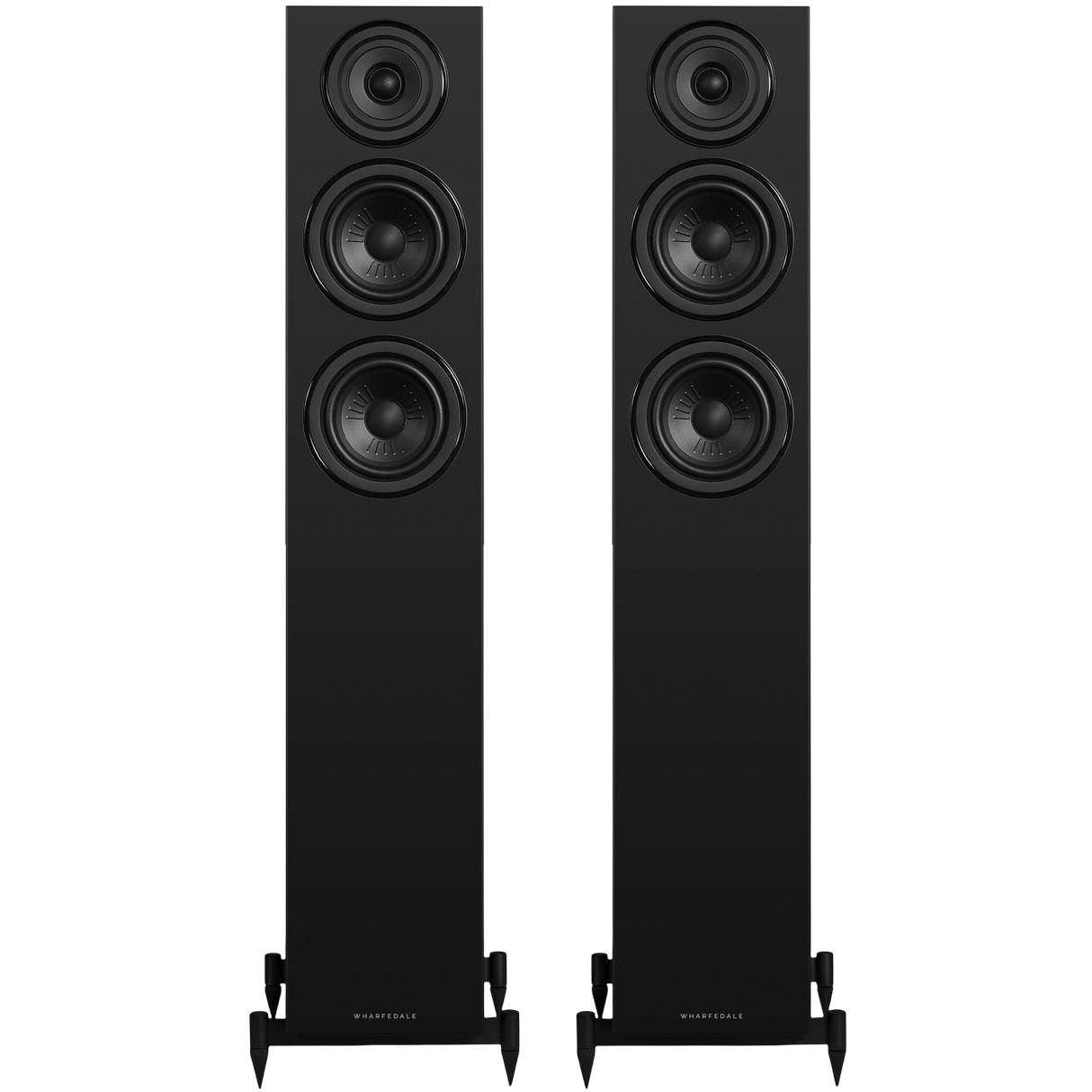
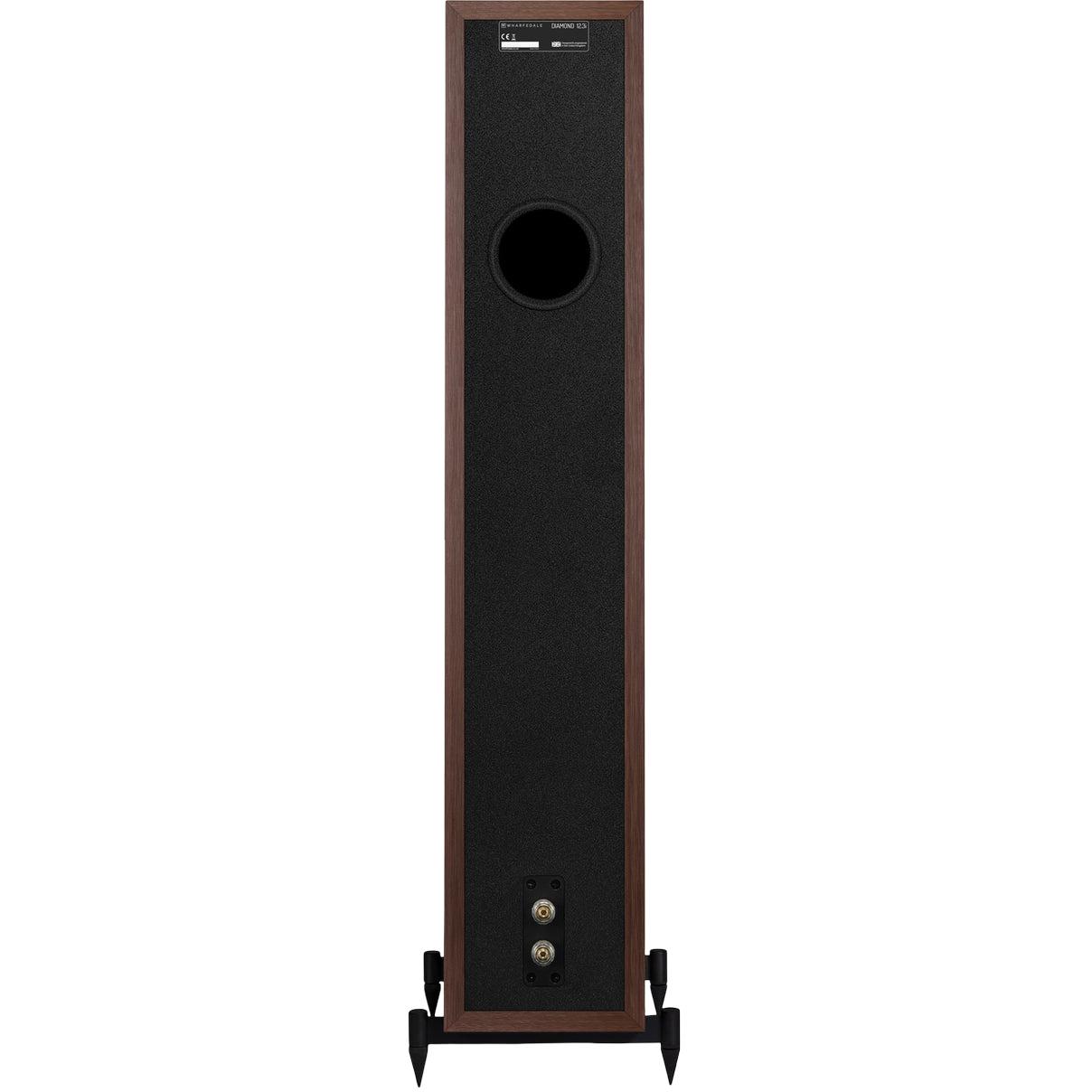
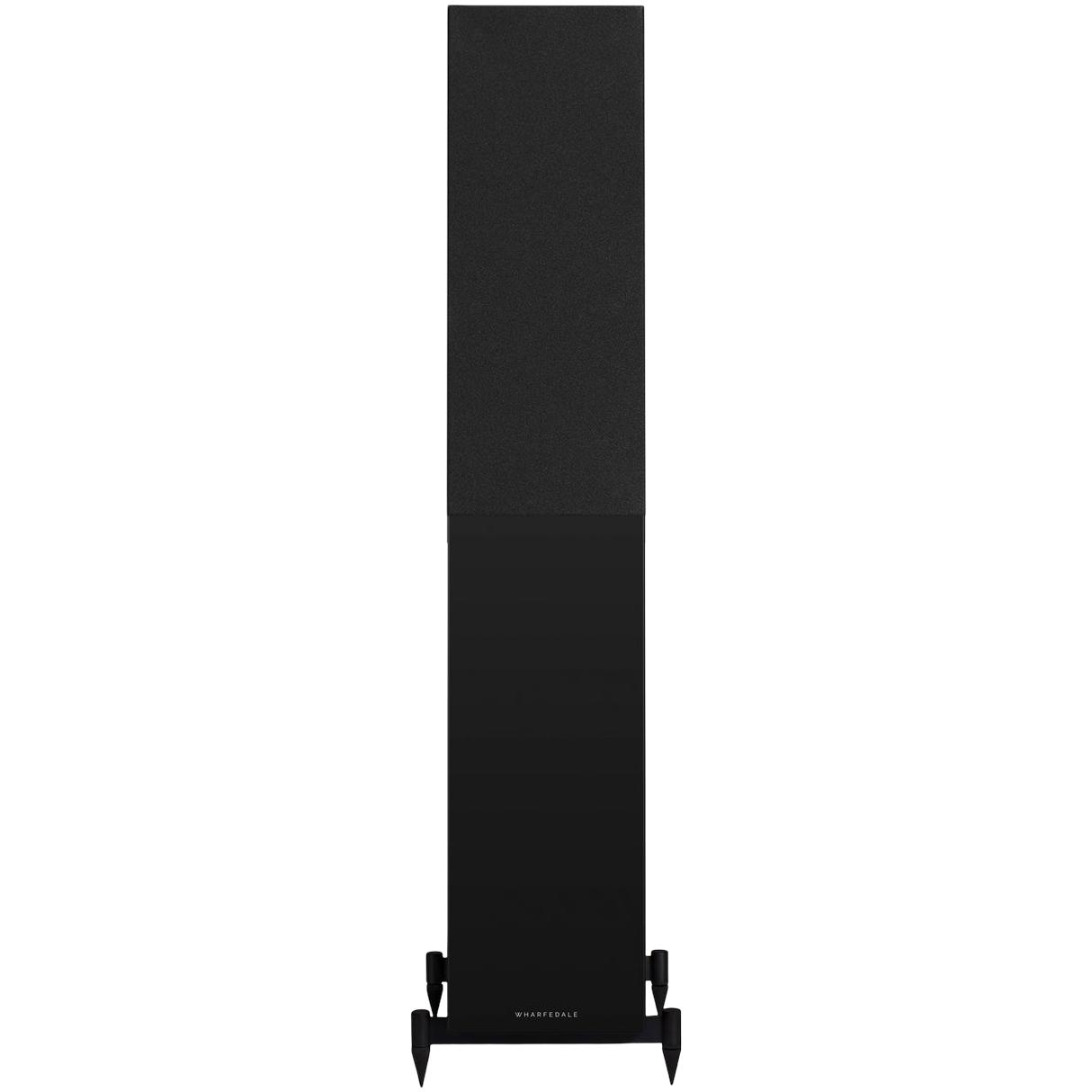
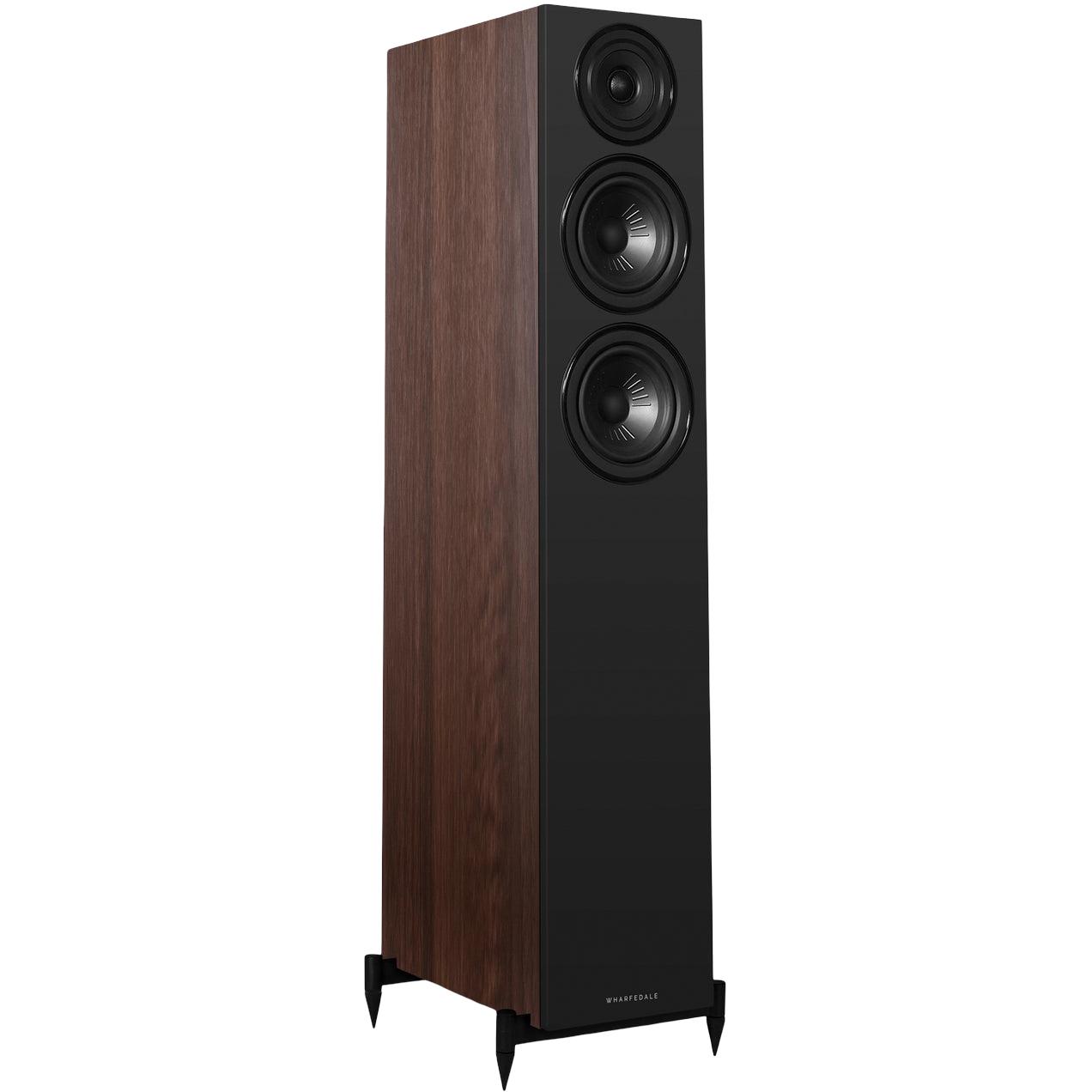
Wharfedale Diamond 12.3i floorstanding speakers
89 dB/W / 8 Ω (min 5) · f3≈45 Hz (bass 7/10) · 30–150 W · floorstanding, 2.5-way, 2×130 mm · load: low; loud 5/10 · room 15–22 m² · mid
prices and stock as of 2026-11-05
Audiomania expert verdict
A budget 2.5-way floorstander and an easy load (89 dB, 8 Ω, 5 Ω minimum) for 15–22 m² rooms and uncomplicated music at moderate volume. Specialists approve it with inexpensive amplifiers (Premiera A1VU, RTM01) but steer metal listeners elsewhere; headroom (102 dB) is modest. AI draft, under review
Ask about Wharfedale Diamond 12.3i
Will it suit your amplifier or room, what else to buy, what to compare with.
In brief
Best if you are looking for:
- calm, “uncomplicated” music — pop, vocals, acoustic, light jazz — at medium and low volume AI draft, under review
- compact 15–22 m² rooms (up to 32 m²): an 18 cm-wide cabinet, no stands or brackets AI draft, under review
- any amplifier from 30 W, incl. budget integrateds and AV receivers: 89 dB, 8 Ω with a 5 Ω minimum — an easy load AI draft, under review
- a first floorstanding system on a budget: 36-month warranty, two professional tests (Stereo.ru, SalonAV) AI draft, under review
Keep in mind:
- for metal and heavy genres the specialist called it “not the best choice” AI draft, under review
- loudness: 102 dB maximum SPL and 130 mm drivers — not enough for parties or large rooms AI draft, under review
- terminal type, box contents and finishes are not on the card — check before buying AI draft, under review
- the sound character rests on only two specialist replies — an audition is recommended AI draft, under review
Product DNA
L071%A structured sound passport: every value carries a source and a confidence.
- Tonal balance
- not yet auditioned
- Delivery character
- not yet auditioned
- Bass depth
- 7calculated1
- Bass control
- not yet auditioned
- Detail resolution
- not yet auditioned
- Plays loud
- 5calculated0.5
- Load difficulty
- 1/10 (low)calculated1
- Drive difficulty
- lowcalculated1
- Amplifier topology fit
- ideal: class A, class AB, class D, class G, hybrid; good: push-pull tube; acceptable: AV receiver; less suitable: single-ended tubecalculated1
- AV receiver OK
- yescalculated1
- Subwoofer need
- music: not needed; cinema: optionalcalculated1
- Placement sensitivity
- not enough data to calculate
- Distance to rear wall
- not enough data to calculate
- Near-wall OK
- not enough data to calculate
- Cable gauge
- 2.5–4 mm² (min 1.5)calculated1
- Cable termination
- no data on the card
- Use scenarios
- good: Quiet evening listening; acceptable: Home cinema front pair, Open-plan room, Rooms under 12 m², Dense, fast music; less suitable: Loud listeningcalculated0.5
- Optimal room area
- 15–22 m² (12–32)calculated0.5
- Tier
- midcalculated1
- What else you need
- amplifier, speaker cablecalculated1
Sound profile
- Bass7/10calculated
too few models in the band for a percentile
- Detailnot yet auditioned
- Soundstagenot yet auditioned
- Microdynamicsnot yet auditioned
- Emotionnot yet auditioned
- Analyticitynot yet auditioned
- Versatilitynot yet auditioned
- Ease of drive10/10calculated
too few models in the band for a percentile
Scores are relative to other models of the same category and price band (60–100k ₽). An empty bar means not yet auditioned.
Sound character
Technical reference (no listening evidence in the data): 2.5-way with two 130 mm polypropylene drivers and a 25 mm fabric dome, bass reflex, 2.2 kHz crossover, 45 Hz – 20 kHz (±3 dB), 102 dB maximum SPL. AI draft, under review[5]
What the specialists say: with a Premiera A1VU at medium and low volume — “no problem, a suitable solution for uncomplicated music”; for metal — “not the best choice of speakers and amplifier”. The manufacturer's description promises “an even treble without sharp accents”. AI draft, under review[3]
Use scenarios
Suits:
- home stereo in 15–22 m² at medium and low volume AI draft, under review
- uncomplicated music: pop, vocals, acoustic, light jazz AI draft, under review
- inexpensive amplifiers and AV receivers (Premiera A1VU, Radiotehnika RTM01) AI draft, under review
- front of a small home cinema — “stereo and multichannel systems” per the description AI draft, under review
Less suited to:
- metal and heavy genres — “not the best choice” AI draft, under review
- loud parties and rooms above 30 m² — 102 dB maximum AI draft, under review
- near-field and desktop — a 97.5 cm floorstander AI draft, under review
Technologies and construction
2.5-way design
What it is: A dedicated 130 mm bass driver and a 130 mm mid/bass driver; a 25 mm tweeter; 2.2 kHz crossover.
Practical benefit: “Separate bass and midrange operation gives a balanced delivery and high intelligibility” (description).
130 mm polypropylene cones
What it is: Both bass/mid drivers are 130 mm with polypropylene cones.
Practical benefit: “High stiffness and stable behaviour at different volume levels” (description).
25 mm fabric-dome tweeter
What it is: A 25 mm fabric-dome tweeter.
Practical benefit: “An even treble without sharp accents” (description) — a soft dome without a waveguide, the prior for comfortable treble.
Bass reflex, 26.6 l internal volume
What it is: Bass-reflex loading; 26.6 l internal volume; 45 Hz (−3 dB) / 40 Hz (−6 dB).
Practical benefit: “Extends the low end while keeping the floorstander compact” (description).
Easy load: 89 dB, 8 Ω (5 Ω minimum)
What it is: 89 dB sensitivity (2.83 V / 1 m), 8 Ω nominal, 5 Ω minimum — a published minimum, rare in this class.
Practical benefit: “Compatibility with a wide range of integrated amplifiers and AV receivers” (description); load 1/10 by rule — any amplifier from 30 W.
Amplifier requirements
Recommended power
57–150 W
57–150 W into 8 Ω is the sweet spot; 30–150 W acceptable
Practice band for 19 m² at average level: 34–68 W
R-AMP-POWER · 1.0.0+c1.0.0 · confidence 1
- Load difficulty
- 1/10 (low)calculated1
- Preferred amplifier character
- No character preference yet — we recommend auditioning the pairing.
Suits:
- class A — ideal
- class AB — ideal
- class D — ideal
- class G — ideal
- hybrid — ideal
- push-pull tube — good
- most modern AV receivers
Note:
- single-ended tube — not recommended
Calculator: is the amplifier enough
Recommended system connection
To get the most from the system we recommend:
Speaker cable
- Gauge
- 2.5 mm²
- Recommended length
- up to 18.2 m per channel
For 3 m per speaker at 5 Ω, 0.41 mm² is enough; the Audiomania standard is 2.5 mm².
R-CABLE · 1.0.0+c1.0.0
In stock now
1,050 RUB · in stock
Why
For 3 m per speaker at 5 Ω, 0.41 mm² is enough; the Audiomania standard is 2.5 mm².
429 RUB · in stock
Why
For 3 m per speaker at 5 Ω, 0.41 mm² is enough; the Audiomania standard is 2.5 mm².
9,690 RUB · in stock
Why
For 3 m per speaker at 5 Ω, 0.41 mm² is enough; the Audiomania standard is 2.5 mm².
Room placement
- Minimum distance to the rear wall
- 20 cm; recommended 30–50 cm
- Distance between speakers
- 2.6–3.3 m
- Toe-in
- 0–10°
Wharfedale Diamond 12.3i: needs ≥ 20 cm from the wall (ideally 30–50), 2.6–3.3 m apart, toe-in 0–10°. Give the wall distance for an exact verdict.
R-PLACEMENT · 1.0.0+c1.0.0
- Near-wall placement
- not enough data to calculate
- Placement sensitivity
- not enough data to calculate
Recommended right now
over the 45-product sampleIn-stock, current models only; refreshed with prices (2026-11-05). Not indexed.
No in-stock models pass the compatibility rules right now — ask the advisor.
rules version 1.0.0+c1.0.0
Audiomania ready systems
Assembled by the rules from in-stock products around this model; prices as of 2026-11-05.
No in-stock system fits these budgets — try the system builder.
Comparison with similar models
No similar models in the catalog yet.
Specifications
Main
- Sensitivity
- 89 dB (2.83 V)
- Nominal impedance
- 8 Ω
- Minimum impedance
- 5 Ω
- Low-frequency limit
- 45 Hz (-3 dB)
± 1
sources disagree
- 40 Hz (-6 dB) spec sheet1
Нижняя граница частот (-6 дБ) | 40 Гц — по §4.9.2 40 × 1,15 = 46 Гц, согласуется с 45 Гц (−3 дБ)
- 40 Hz (-6 dB) spec sheet1
- High-frequency limit
- 20,000 Hz
- Maximum SPL
- 102 dB (unknown)
- Recommended amplifier power
- 30–150 W
- Ways
- 2.5
- Crossover frequencies
- 2,200
Construction
- Enclosure
- bass reflex
- Cabinet volume
- 26.6 l
- Wall-mount points
- nocalculated
Drivers
- Bass drivers
- 2 × 130 mm, полипропилен
- Midrange driver
- 130 mm, полипропилен
- Tweeter
- 25 mm, fabric
- Tweeter height from base
- 761 mmcalculated
Dimensions
- Dimensions (W×H×D)
- 180 × 975 × 348 mm
Weight
- Weight
- 19.5 kg (each)
Box contents
- Warranty
- 36 months
Documents
FAQ
›Will a Pioneer A-40AE amplifier do? I listen to metal.
›How will it work with a Premiera A1VU? 20 m², medium volume and below.
›Will a Radiotehnika RTM01 amplifier do for a 23 m² room?
›How much amplifier power is needed, and will an AV receiver do?
›Will a tube amplifier work?
›What room size does it suit?
›Do I need a subwoofer?
›How loud does it play?
›Which cable is needed?
›How close to the wall can it go?
›Does it need an amplifier?
Customer reviews
No customer reviews yet. Be the first owner to share your experience.
Audiomania expert opinion
The Diamond 12.3i is a rational entry into floorstanders: an easy load, a slim cabinet, a 36-month warranty and two professional tests. Per the description and the specialists' replies the delivery is calm, without sharp accents. AI draft, under review[5]
Take it for uncomplicated music in 15–22 m²; for metal and loud parties the specialists honestly point elsewhere (Radiotehnika Alfa 1.02 MKII — “higher midrange detail”). AI draft, under review[3]